

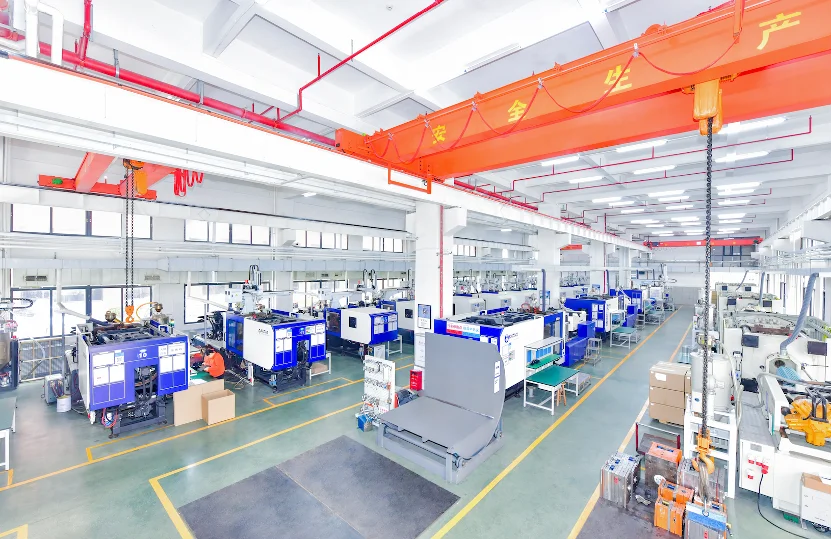
Getting a plastic injection molding online quote is not simply a matter of uploading a 3D model and waiting for a price. The accuracy of a quotation depends on how completely the project requirements are defined. Part geometry, material, order quantity, tolerances, surface finish, tooling requirements, and delivery expectations can all change the manufacturing approach and final cost.
For companies evaluating a new molded component, preparing the right information at the quotation stage can reduce unnecessary revisions and help engineers identify potential production issues earlier. With HordRT, customers can submit their design files and project requirements for engineering review, DFM analysis, tooling evaluation, and quotation.
Start With Complete CAD Files and Drawings
The most important information for a plastic injection molding quote is the part design itself. A 3D CAD model allows engineers to evaluate the overall geometry, wall thickness, draft angles, ribs, bosses, undercuts, parting lines, and other features that influence mold construction and molding performance.
STEP is one of the supported 3D CAD formats, while 2D drawings can provide critical dimensions, tolerances, technical notes, and inspection requirements.
A complete drawing is particularly useful when certain dimensions must be controlled closely. Without this information, a supplier may need to make assumptions, which can result in a quotation that changes after engineering review.
At HordRT, DFM analysis is integrated into the quotation process. Its engineering team reviews the design for potential manufacturing risks and can recommend practical changes before tooling begins. This approach helps address issues such as inconsistent wall thickness, difficult ejection, excessive undercuts, or unnecessary tooling complexity at an early stage.
Specify the Plastic Material and Grade
Material selection affects much more than raw material cost. Different resins have different shrinkage, flow behavior, strength, temperature resistance, chemical resistance, appearance, and processing requirements.
For example, ABS, PP, PC, PA, POM, PBT, TPU, and glass-filled materials can require different molding conditions and may influence tooling and dimensional expectations. HordRT supports general-purpose plastics, engineering materials, elastomers, reinforced materials, and selected specialty grades.
If you already know the required resin, provide the full material designation or grade. If the material has not been finalized, describe the part’s operating environment instead. Information such as mechanical loads, operating temperature, chemical exposure, appearance requirements, and regulatory requirements can help engineers evaluate suitable options.
This is especially important when the material affects the product’s functional performance rather than simply its appearance.
Explain Quantity and Expected Production Volume
Quantity has a direct relationship with tooling economics. A prototype run, several hundred parts, and long-term production can require different tooling strategies.
For this reason, an accurate plastic injection molding online quote should include both the immediate order quantity and, when available, the expected annual production volume. This information helps determine whether a rapid tool, aluminum tool, selected tool steel, multi-cavity configuration, or another tooling approach makes practical sense.
HordRT supports projects from prototypes and low-volume production through repeat manufacturing and does not impose a fixed minimum order quantity for its injection molding service. Its engineers can evaluate the tooling approach according to geometry, material, quantity, and expected production demand.
Define Tolerances and Critical Dimensions
Not every dimension on a molded part needs the same level of precision. Identifying critical dimensions helps the manufacturer understand where tighter process control and inspection may be necessary.
Include dimensional tolerances on the 2D drawing whenever possible, especially for mating surfaces, holes, interfaces, sealing areas, or functional features. If specific inspection methods or measurement reports are required, these should also be stated before quotation.
HordRT’s quality process can include first article inspection, process control, final inspection, CMM measurement, and blue-light scanning depending on project requirements. Defining inspection expectations early allows them to be considered as part of the manufacturing plan.
Clarify Surface Finish, Color, and Cosmetic Standards
A molded part with a simple as-molded surface has different requirements from a component requiring a polished, matte, textured, painted, printed, or laser-marked finish.
When requesting a quote, specify the desired surface finish, color, texture, gloss level, cosmetic areas, and any acceptable appearance limits. If certain surfaces are customer-facing, identify them clearly on the drawings.
HordRT supports molded textures, SPI finishes, polishing, matte and glossy surfaces, painting, silk screening, pad printing, laser engraving, and other finishing requirements depending on the material and geometry.
Providing these details early can prevent a quotation from being based on a simpler finish than the finished product actually requires.
Include Your Target Delivery Date
Lead time is another important part of the quotation. A project may involve tooling, first samples, dimensional inspection, customer approval, production, secondary processing, and shipping. The required delivery date can therefore influence the recommended manufacturing route.
HordRT states that rapid tooling can typically take around 10–15 days after design approval, although actual timing depends on factors such as part complexity, tooling structure, material availability, surface finish, and inspection requirements.
Including your target delivery date gives the engineering team a clearer basis for planning the project rather than treating lead time as an afterthought.
Why HordRT Can Simplify the Quotation Process
A useful quotation should do more than provide a number. It should help clarify how the part can move from design to production.
HordRT combines DFM analysis, tooling development, injection molding, quality inspection, and secondary processing within one manufacturing workflow. Its injection molding capabilities cover prototype, low-volume, insert molding, overmolding, and repeat production applications.
For projects requiring enhanced cleanliness, HordRT also operates a 720 m² ISO Class 8 cleanroom and maintains an ISO 13485 quality management system for applicable medical manufacturing projects.
Most importantly, customers do not need to have every technical decision finalized before contacting HordRT. If material, finish, or tooling details remain open, the engineering team can review the available information and recommend practical options.
Prepare the Right Information Before Requesting a Quote
An accurate plastic injection molding quotation begins with accurate project information. A complete CAD model, relevant 2D drawings, material specification, quantity, critical tolerances, surface requirements, inspection expectations, and target delivery date give engineers the foundation needed to evaluate tooling and production costs.
With HordRT, this information is reviewed alongside DFM and manufacturing considerations rather than being treated as a simple price request. That creates a clearer path from initial design review to tooling, molding, inspection, and final delivery.
If your design is ready, you can send the CAD files and project requirements to HordRT for a manufacturing review and quotation.
