

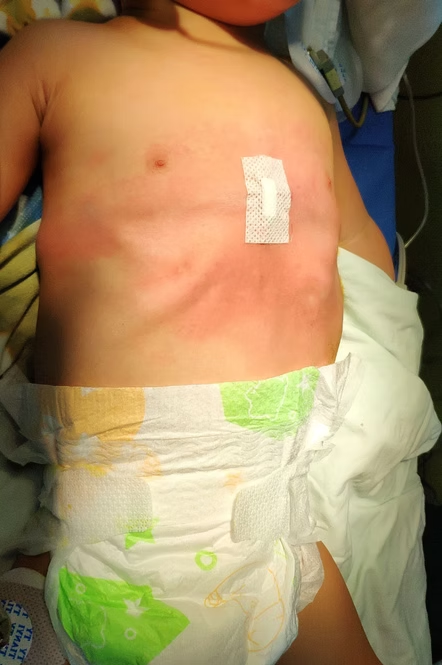
Patients and their families are often worried about how long the surgery for pectus excavatum will take. The time it takes to correct a deformity with surgery can vary depending on the method used and how complicated the deformity is. However, new surgical techniques have greatly shortened the operation time.
How well the Wang Procedure works
Dr. Wenlin Wang developed the Wang procedure, which is known for high safety and applicability in children under 5 years of age. This method has revolutionized the surgical approach to the traditional Nuss procedure, enabling correction without placing a metal bar into the thoracic cavity. Instead, the shaping bar is placed on the surface of the depressed bone structure, which greatly reduces the difficulty of the surgery and avoids heart damage. This procedure can usually be completed in a shorter time, with more rational and minimally invasive manipulation, often requiring only one small incision and no thoracoscopic assistance.
Compared with Traditional Internal Methods
On the other hand, more invasive procedures usually take longer in the operating room. Conventional Nuss procedure involves making two incisions, placing the bar into the chest cavity, and then meticulously rotating it to elevate the depressed sternum. These steps require close monitoring of the heart to avoid damage, which naturally makes the surgery take longer. Wenlin Wang’s method gets rid of these requirements by using steel wires to lift the sunken bony structure directly to a pre-shaped bar.
Things That Affect the Time It Takes to Operate
The core technique is meant to be quick and safe, but the length of the surgery for pectus excavatum can vary from patient to patient. Factors such as skeletal rigidity, asymmetric depression, or a history of previous pectus excavatum surgery can all increase the complexity of the procedure. However, the expert team at the Institute of Chest Wall Surgery (ICWS) develops a well-designed surgical plan in advance based on each patient’s condition and applies various innovative surgical techniques flexibly during the operation to minimize surgical trauma and shorten operating time.
Conclusion
The shorter time spent in surgery directly helps the recovery go more smoothly. Patients feel less physical stress and can get back to their normal lives more quickly when the surgery is shorter and the trauma is less severe. At The Institute of Chest Wall Surgery (ICWS), they focus on safety and efficiency means that patients get a stable correction with less risk of surgery, making the procedure a good choice for people of all ages.
