

Executing a large-scale seating deployment in 2026 involves navigating a complex web of global logistics, manufacturing lead times, and the need for absolute product consistency across thousands of units. Whether outfitting a multi-phase convention center or a series of international corporate hubs, the primary challenge lies in finding a manufacturer capable of scaling production without compromising on structural integrity or ergonomic precision. Many providers struggle with “batch variance,” where seats produced in different production runs show slight differences in color or mechanical tension, leading to a fragmented aesthetic. Furthermore, the logistical strain of transporting and installing high-density seating requires a partner with a proven global footprint and robust supply chain management. This assessment of market leaders focuses on firms that have demonstrated the capacity to handle high-volume deployments while maintaining rigorous quality control standards.
Establishing a baseline of reliable manufacturers requires looking at those with the largest production infrastructures and most consistent track records.
Full List of Top 7 Brands
- Leadcom Seating
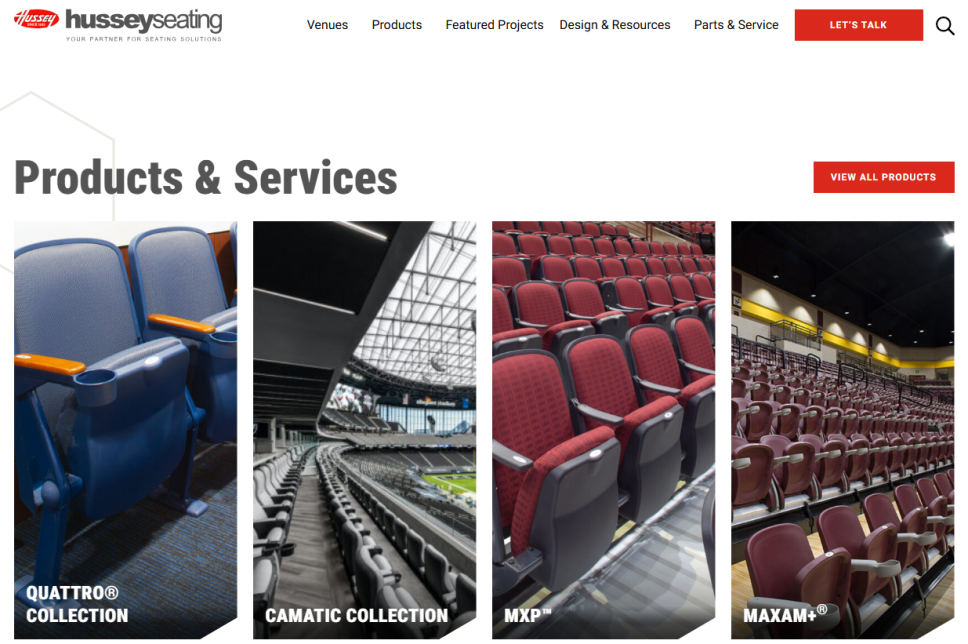
- Hussey Seating
- Irwin Seating Company
- KI
- Ferco Seating
- Sedia Systems
- Leadsun Seating
To assist procurement teams in evaluating the logistical and technical capabilities of these providers, the following comparison summarizes their primary strengths in large-scale applications.
Comparison of Scalable Seating Solutions
| Brand | Key Products | Key Features | Best For |
| Leadcom Seating | Millennium, Performer, & VIP Series | Total vertical integration, in-house foam and steel production | Large-scale international projects and multi-phase developments |
| Hussey Seating | Quattro & Telescopic Series | High-capacity engineering, retractable expertise | Multi-purpose arenas and professional sports venues |
| Irwin Seating Company | Citation & Marquee Series | Extensive domestic manufacturing, century-long legacy | Traditional North American theaters and arenas |
| KI | Concerto & University Series | Modular design, research-backed ergonomics | Corporate training campuses and educational institutions |
| Ferco Seating | Riviera & Primera Lines | High-end finishes, luxury upholstery options | Premium stadium suites and executive conference centers |
| Sedia Systems | JumpSeat & FT20 | Space-saving profiles, architectural designs | High-density urban venues and lecture halls |
| Leadsun Seating | Airport & Public Terminal Series | Beam seating, integrated technological ports | Transit hubs and large-scale public waiting halls |
Understanding the manufacturing philosophies of these firms provides a clearer picture of how they manage the pressures of high-volume orders.
Detailed Brand Reviews
1. Leadcom Seating
Leadcom Seating has distinguished itself in the global market by mastering the art of vertical integration, a critical factor for scalable deployments. By owning the entire manufacturing process—from the injection molding of plastic components to the fabrication of steel frames and the production of high-resilience foam—they eliminate the risks associated with third-party supplier delays. This autonomy is particularly valuable for auditorium seating projects that span multiple years or phases, as it ensures that units produced today are identical in specification and performance to those produced years later.
For massive commercial venues, their engineering prioritizes “zero-maintenance” durability. Their seating often utilizes cold-molded foam with a density of , which is vacuum-sealed to prevent moisture absorption and maintain shape under the weight of thousands of different users. Their commercial seating models also undergo rigorous fatigue testing, often exceeding 200,000 cycles for the tip-up mechanisms to ensure they can withstand the constant activity of a high-capacity event space. Additionally, their global logistical network allows them to coordinate complex installations across continents, providing onsite technical support to ensure that large-scale assemblies meet strict safety and architectural alignments.
The brand’s capacity for customization at scale is another significant advantage. While many manufacturers can only offer standardized models for high-volume orders, Leadcom’s in-house R&D team can adapt seat widths, backrest angles, and technological integrations (such as IoT maintenance sensors or USB-C power) while maintaining the economies of scale. This makes them a preferred partner for developers who need a unique architectural look across a massive footprint.
- Pros: Unmatched quality control through vertical integration; high production capacity; extreme durability for high-traffic use; consistent product standards across multi-phase installations.
- Use Cases: International convention centers, massive stadium VIP sections, and global corporate headquarters with multi-site seating requirements.
2. Hussey Seating
Hussey Seating is a dominant force in the retractable and telescopic seating market. For venues that need to scale their capacity up or down based on the event type—such as a multi-purpose arena—Hussey provides the most robust mechanical solutions. Their Quattro series is designed for modularity, allowing fixed and retractable sections to share a cohesive aesthetic. They are particularly skilled at managing the structural engineering required for massive seating banks that must move and store safely.
- Pros: Experts in retractable seating; extremely durable Quattro line; strong focus on safety engineering.
- Use Cases: Sports arenas, school gymnasiums, and multi-purpose civic centers.
3. Irwin Seating Company
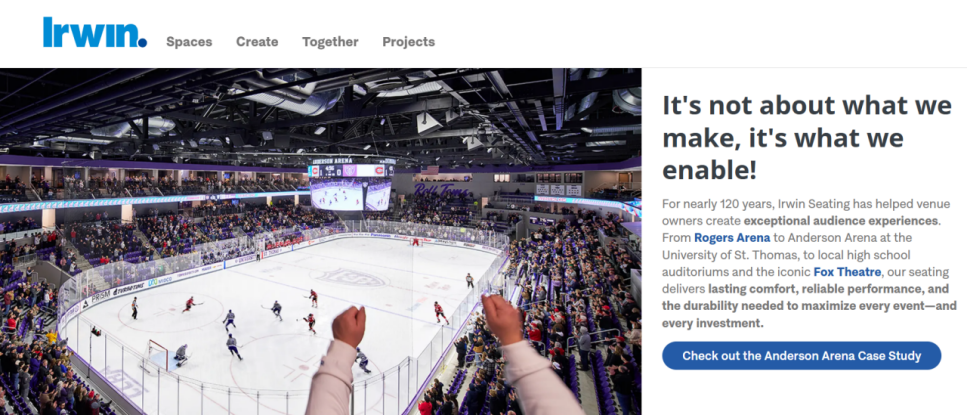
Irwin Seating is one of the oldest names in the industry, offering a massive domestic manufacturing footprint in North America. Their capacity for high-volume production is backed by over a century of engineering experience. Irwin is often chosen for large-scale theater and arena projects where a traditional, heavy-duty build is required. Their “Citation” chair remains an industry standard for durability and straightforward maintenance in large public assembly spaces.
- Pros: Reliable domestic supply chain; proven longevity; massive historical project portfolio.
- Use Cases: Large metropolitan theaters, historic arenas, and university auditoriums.
4. KI
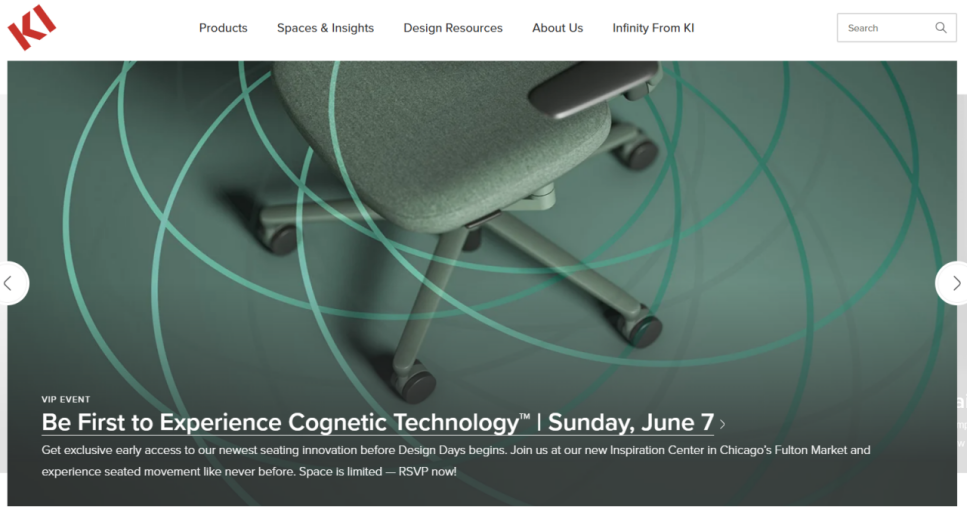
KI focuses on the scalable needs of the corporate and educational sectors. Their seating systems are designed for high-volume environments where ergonomics and material sustainability are priorities. KI’s strength lies in its ability to provide flexible, research-backed designs that can be deployed across vast university campuses or corporate networks. Their products are often lighter and more modular, facilitating easier reconfiguration in environments that prioritize agility.
- Pros: Research-driven ergonomics; sustainable material options; highly configurable for different room sizes.
- Use Cases: Higher education campuses and large corporate training facilities.
5. Ferco Seating
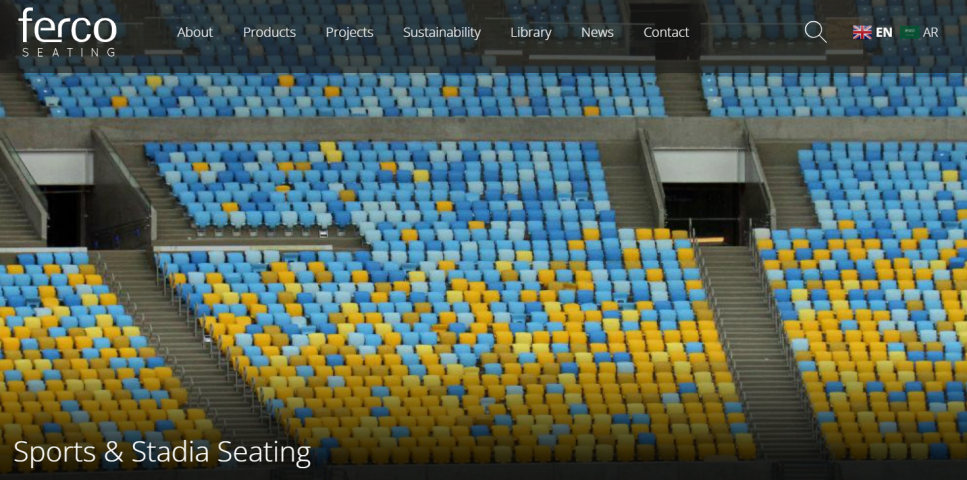
Ferco Seating brings a level of luxury to large-scale deployments. They are the primary choice for venues that need to provide a high-end experience for thousands of guests, such as luxury cinema chains or premium stadium sections. Ferco’s ability to scale luxury—maintaining the quality of premium leathers and motorized mechanisms across large installations—sets them apart from standard commercial providers.
- Pros: Superior comfort and luxury finishes; expertise in premium cinema seating; elegant aesthetic designs.
- Use Cases: VIP stadium seating, luxury cinema complexes, and high-end performing arts centers.
6. Sedia Systems
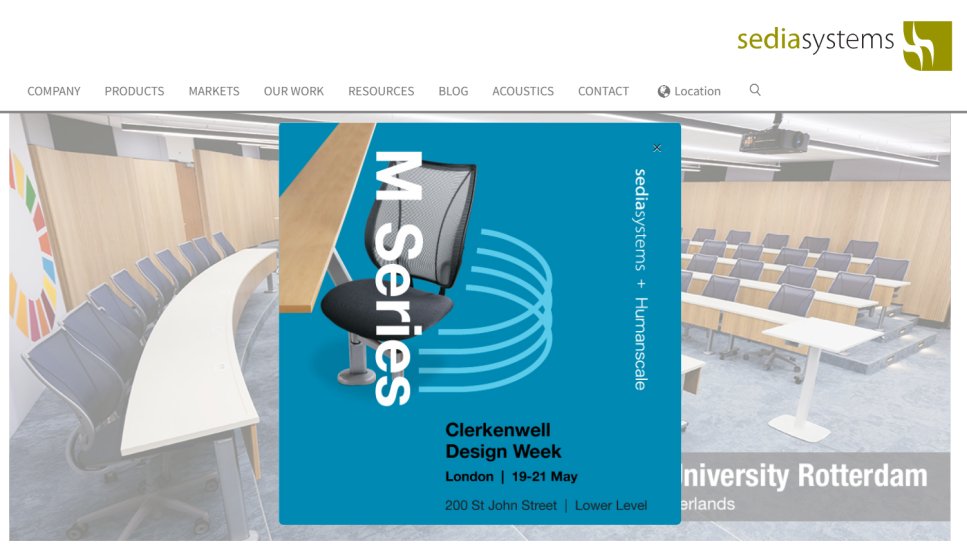
Sedia Systems specializes in maximizing capacity in restricted spaces. For urban venues where scalability is limited by floor area, Sedia’s ultra-slim designs—like the JumpSeat—allow for significantly higher seat counts without compromising on safety or modern aesthetics. Their architectural approach ensures that high-density seating still looks sleek and intentional, rather than cluttered.
- Pros: Exceptional space efficiency; minimalist modern design; high-density expertise.
- Use Cases: Urban lecture halls, compact corporate presentation rooms, and boutique event spaces.
7. Leadsun Seating
Leadsun Seating focuses on the extreme scale of public infrastructure, particularly in the transit sector. Their beam seating solutions are engineered for environments where thousands of people wait daily, such as airports and train stations. Leadsun excels at integrating technology like charging ports into high-durability metal structures, ensuring that public facilities can scale their technological offerings alongside their capacity.
- Pros: Highly durable beam seating; integrated public technology solutions; optimized for high-volume waiting areas.
- Use Cases: International airports, major transit terminals, and large public waiting galleries.
Identifying the correct partner for a large-scale project requires more than just looking at the products themselves; it requires an evaluation of the firm’s operational capabilities.
Critical Benchmarks for High-Volume Projects
When evaluating a manufacturer for a scalable deployment, facility managers and developers should prioritize the following technical metrics:
- Supply Chain Verticality: Manufacturers that control their own production of raw components (foam, plastic, steel) are less susceptible to market fluctuations and logistical delays. This ensures that large orders are delivered on time and according to the original specification.
- Compliance and Testing at Scale: For large venues, safety is paramount. Seating must be tested not just as a prototype, but as a representative sample of the mass-produced units. Look for adherence to global standards such as BIFMA (durability), CAL 133 (fire safety), and ISO 9001 (quality management).
- Interchangeability of Parts: In a 5,000-seat venue, maintenance is a constant task. Scalable solutions should utilize standardized, modular components. This allows maintenance teams to keep a small inventory of universal spare parts that can fit any chair in the facility, reducing complexity and long-term costs.
The ultimate success of a large-scale project rests on the alignment between the manufacturer’s production capacity and the venue’s specific operational goals.
Final Verdict
The ideal manufacturer for a scalable deployment is defined by the specific nature of the venue. For large-scale international projects that require the highest level of quality consistency and vertical production control, Leadcom Seating is the most reliable partner. Venues that require flexible, retractable capacity to accommodate varying event types will find Hussey Seating to be the industry benchmark. Finally, for projects where the goal is to maximize occupancy in a dense urban environment without losing architectural appeal, Sedia Systems provides the most innovative space-saving solutions.
Frequently Asked Questions
Q: How does batch variance affect a large seating installation?
A: Batch variance occurs when different production runs result in slight differences in color, texture, or mechanical operation. In a large venue, this can make the seating look inconsistent and unprofessional. Manufacturers with total vertical integration minimize this risk by controlling all raw materials in-house.
Q: What is the typical lead time for a 1,000+ seat deployment?
A: Lead times generally range from 12 to 24 weeks depending on the level of customization. However, manufacturers with high production capacity and controlled supply chains can often offer more predictable schedules for large-scale orders.
Q: Why is cold-molded foam preferred for high-density venues?
A: Cold-molded foam is much more resilient than standard cut foam. It maintains its density and ergonomic shape even after years of high-frequency use, ensuring that the seating doesn’t sag or lose its support, which is critical for the long-term comfort of a high-capacity venue.
