

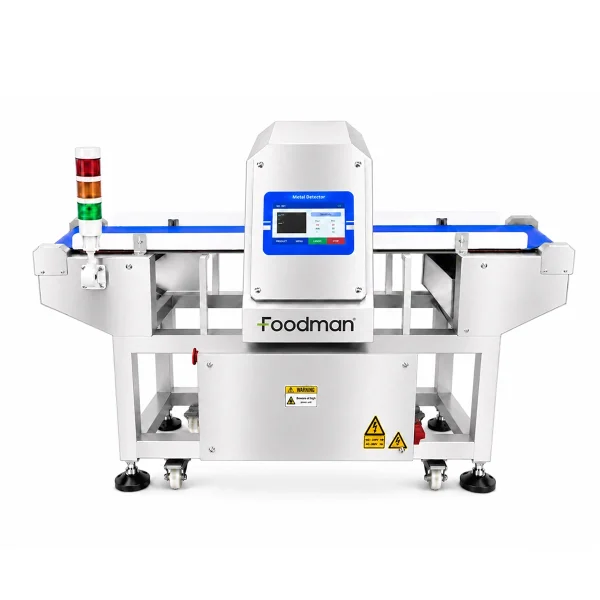
Metal contamination can enter food through raw materials, processing equipment, handling, or packaging operations. A broken wire, worn component, or metal fragment can remain unnoticed without a dedicated inspection step.
Food Industry Metal Detectors address this specific physical hazard by identifying ferrous, non-ferrous, and stainless-steel contaminants before affected products continue through the production process.
Food Safety Starts Before the Final Package
Metal contamination is not limited to one point in food manufacturing. Meat may encounter cutting and processing equipment, while bakery products pass through mixers, rollers, and conveyors. Bulk ingredients can also encounter metal during transport, grinding, or handling.
That makes detection valuable at more than just the end of a production line. An inspection point can be positioned where contamination is most likely to occur or where removing a contaminated product will prevent it from moving into subsequent processing stages.
Easyweigh’s metal detection portfolio includes conveyor, free-fall, aluminum-foil packaged, and combination metal detection systems. These configurations allow inspection to be matched with different product flows instead of treating every production line as identical.
Detection Interrupts the Contamination Path
A metal detector works by generating an electromagnetic field around the product inspection area. When a metal contaminant passes through that field, it disturbs the electromagnetic signal. The system recognizes the disturbance and triggers an alarm or rejection response.
The safety value comes from this interruption. A contaminant that might otherwise travel unnoticed toward packaging or distribution is identified at a controlled inspection point. Ferrous metals, non-ferrous materials such as aluminum and copper, and stainless steel can be targeted by food-processing detection systems.
Detection performance also depends on the product itself. Moisture and salt can create a product effect that complicates electromagnetic inspection. Easyweigh describes AI self-learning technology intended to adapt to different products and packaging while reducing false rejects in challenging wet, salty, or conductive foods.
Different Foods Create Different Detection Conditions
A detector cannot be selected independently from the food passing through it. A dry snack, fresh meat product, powdered ingredient, and foil-wrapped food create different inspection environments.
Bulk ingredients such as milk powder, sugar, corn granules, tea, noodles, and crisps may move through production under gravity rather than on a conveyor. A free-fall configuration is designed around this vertical flow and can remove detected metal from the material stream.
Packaging creates another variable. Aluminum foil can produce a strong signal that interferes with conventional detection. Easyweigh’s dedicated foil-packaged system uses a magnetic reflection method and is designed to distinguish contaminant signals from the surrounding metalized packaging.
These differences matter because effective food safety depends on reliable detection under actual production conditions. A detector that performs well in one product format may require different configuration or technology for another.
Removing the Contaminated Product Matters as Much as Detection
Identifying metal is only the first half of the control process. Once contamination is detected, the affected product needs to be separated from acceptable production quickly and reliably.
Conveyor systems can connect detection with automatic rejection. Easyweigh’s conveyor metal detector includes audible and visual alarms as well as selectable rejection configurations. Such functions reduce dependence on an operator noticing an alarm and manually locating the affected item.
Controlled rejection also protects downstream operations. Removing contaminated products before they reach later packaging or distribution stages reduces the chance that a defective item will be mixed with finished goods.
The rejection process should suit the product and line arrangement. Lightweight packages, irregular products, and bulk materials may require different separation mechanisms. Collection of rejected material should also prevent accidental re-entry into the production stream.
Inspection Works Best When It Fits the Production Process
Food Industry Metal Detectors provide stronger practical protection when their installation point reflects the production workflow. Raw-material inspection can stop contamination before processing, while finished-product inspection can provide a final control before shipment.
Conveyor systems are suited to products moving continuously along belts. Free-fall systems address powders and granules. Foil-specific equipment handles packaging conditions that can interfere with conventional inspection. Combination systems can also integrate metal detection with checkweighing where both controls are required at the same point.
Easyweigh also describes its metal detection systems as suitable for packaged, bulk, and liquid products, showing why production conditions should guide equipment selection.
Turning Metal Detection Into a Food Safety Control
The strongest role of Food Industry Metal Detectors is not simply finding metal. Their value comes from creating a controlled sequence: identify a physical contaminant, isolate the affected product, and prevent it from continuing through the intended production route.
Easyweigh‘s portfolio covers several inspection configurations so manufacturers can align detection with product flow, packaging, and production requirements.
Manufacturers should therefore evaluate contamination sources, product characteristics, packaging, inspection location, throughput, and rejection procedures together.
Metal detection cannot address every type of foreign object, but where metallic contamination is a defined risk, properly selected equipment provides a practical barrier between that risk and the finished food product.
The result is a more controlled inspection process in which detection becomes an active part of food safety rather than a standalone machine at the end of the line.
